
American League: 1901-Present
After the collapse of the American Association in 1892, the National League was the only remaining Major League. That’s when Byron Bancroft Johnson became president of the Western League (the strongest of the minor leagues) and began plotting to form another Major League. He gained a crucial ally in Charles Comiskey and bid his time for the opportunity to strike. Johnson realized that the National League was alienating fans by encouraging drunkenness, rowdiness, and profanity at the ballpark. He banned such activities at Western League parks and openly courted women and families.
His opportunity materialized in 1900 when the National League shrunk from 12 teams to 8. Baltimore, Washington, Louisville, and Cleveland now no longer had clubs. He immediately found investors to put teams in Baltimore, Washington, Cleveland, and Milwaukee. The Western League already had clubs in Detroit and Chicago, so he now had six. He then made the bold move to confront the Senior Circuit directly by putting teams in Boston and Philadelphia and declared his league a major league.
Their initial effort to pilfer talent from the Nationals was very successful. Johnson let it be known that he wasn’t going to honor the reserve clause and encouraged his owners to sign players already under contract to National League clubs.
Ed Delahanty signed with Washington, Elmer Flick with Cleveland, Sam Crawford with Detroit, and the great Cy Young with Boston. These were just the biggest names of the many the American’s signed. However, the most important signing was when the Philadelphia Athletics signed a young sensation away from the crosstown Philadelphia Phillies.
Napoleon Lajoie was to become the greatest player in the first decade of the new league, but the new league did not land him without a bitter legal battle. When the Philadelphia Athletics signed “Larry” Lajoie away from the crosstown Phillies in 1901, the Phillies immediately sued for breach of contract. While the legal battle raged in the Pennsylvania courts, Lajoie won the triple crown in the American League’s inaugural season, leading in home runs, RBI, and batting average. The legal case finally went all the way to the Pennsylvania Supreme Court, who in 1902 ordered the Athletics to return Lajoie to the Phillies for the 1902 season.
Ban Johnson, however, was not about to relinquish this most valuable commodity. He convinced the Athletics to transfer Lajoie’s contract to the Cleveland Indians. The condition for the transfer was that the Indians were forbidden from allowing Lajoie to cross into Pennsylvania. Since the Pennsylvania Supreme Court had no authority outside the Keystone State, Lajoie remained in the American League. The National League then went to the Ohio Courts looking for a similar ruling. They didn’t get it, and to the National League’s consternation, the Ohio Supreme Court indicated they were going to take another look at Baseball’s Reserve Clause.
Bigger issues were now at stake, so the National League withdrew their lawsuits and began negotiations for peace with Johnson and his American League. That’s how the American League achieved their complete victory over their rival. A peace that has existed between the two leagues for nearly 120 years was established.
The league has been relatively stable since its creation. The Milwaukee franchise fled to St. Louis after only one year and the Baltimore team moved to New York after the peace agreement was signed in 1903, that franchise eventually becoming the New York Yankees.
For the next 51 seasons the same teams played in the same cities. Unlike in the National League, competitive balance was not maintained. The Boston Americans/Red Sox (7) and Philadelphia Athletic (6) franchises won 13 of the first 19 pennants (68%). Then the Yankees won 29 of the next 44 (66%). This led to financial stress on many of the unsuccessful clubs. The St. Louis Browns moved to Baltimore in 1854 and are the current Orioles, the Athletics surrendered Philadelphia to the Phillies in 1955 and moved to Kansas City, then to Oakland 13 years later. The always struggling Washington Senators finally relocated to Minneapolis in 1961 and are currently the Minnesota Twins. That move forced the American League to put another franchise in the Nation’s Capital (strictly for political reasons) in the expansion of 1961. Los Angeles got the other new club, the Angels, who moved to Anaheim in 1965. They have remained in Orange County ever since, but have changed their name several times (California Angels, Anaheim Angels, Los Angeles Angels of Anaheim, and their current name back to the original Los Angeles Angels).
The expansion in 1969 put teams in Kansas City and Seattle. The Royals have remained in KC ever since, but the underfunded Seattle Pilots transferred to Milwaukee after only one year and are now the Brewers. The expansion Senators predictably failed again in Washington, and moved to Dallas in 1972, becoming the Texas Rangers.
Seattle got a second opportunity in the expansion of 1977 and this time it stuck, the Mariners and the Toronto Blue Jays joined the circuit then. The American League created their last new franchise in 1998, and welcomed in the Tampa Bay Devil Rays, who shortened their name to the Tampa Bay Rays in 2008.
1998 was also the year the Brewers were moved to the National League to help with schedule balance. The last transfer was made by the Houston Astros, who changed leagues in 2013 to give each league 15 clubs. This explains the current make-up of the Junior Circuit.
American League All-Time Greatest Team
Catcher
The problems with using WAR as the only way to judge the value of players can best be shown by the ratings of catchers in the American League. Gordon “Mickey” Cochrane (AL 1925-1937) career WAR is only 49.1. That is less than Bill Dickey (AL 1928-1946) WAR 57.3, Carlton Fisk (AL 1969-1993) WAR 68.4, Ivan Rodriguez (1991-2002, 2004-2009) (NL 2003, 2009-2011) WAR 63.4, and Joe Mauer (2004-2018) WAR 55.3. Mickey Cochrane was the most respected player in the American League from 1929 through 1936. He won two MVPs and was the on field leader of the only two teams (Athletics 1929-1931 and Tigers 1934-1935) to win consecutive American League pennants, not named Yankees, between 1924-25 (Washington Senators) and 1969-1971 (Baltimore Orioles). He was a top notch receiver and may be the best hitting catcher in American League history. His On Base/Slugging/ On Base + Slugging numbers were .419/.478/.897. Just for comparisons Bill Dickey’s were .382/.486/.868, Carlton Fisk .341/.457/.766, and Ivan Rodriguez .336/.474/.810. Cochrane did play in the big hitting of the 1920s and 1930s, but so did Dickey, while Rodriguez played in the high run 1990s. Fisk was the only one to not play in a high run environment. Only Rodriguez was better behind the plate, but Cochrane was excellent (Bill James grades him an “A”). If Bump Hadley had not beaned Cochrane and nearly killed him in May of 1937, the debate over the greatest catcher in American League history would already be over, regardless of WAR. The only American League catcher who can challenge “Black Mike” is Lawrence “Yogi” Berra (AL 1946-1963).
If you’re looking for the “Bill Russell” of Major League Baseball, you’ve found him in Yogi Berra. In Berra’s 18 seasons with the Yankees, The Bronx Bombers won 14 American League pennants and 10 World Series Titles. We earlier mentioned the respect accorded Mickey Cochrane in the 1920s and 1930s, Berra earned the same stature in the 1950s. When the Yankees won their record 5 World Series in a row (1949-1953), Berra’s MVP tallies were, 15th in 1949, 3rd in 1950, 1st in 1951, 4th in 1952, and 2nd in 1953. He followed that with two more wins in 1954 and 1955, and another 2nd in 1956. He was viewed while active, as the most valuable player in the American League.
Let’s do a direct comparison of Yogi and his only competition for greatest catcher in American League history, Mickey Cochrane. As an offensive force Yogi’s OBP/SP/OBPS numbers for his career were .348/.482/.830 with a peak of .383/.533/.915 in 1950. As noted earlier “Black” Mike’s were .419/.478/.897 with a peak of .423/.553/.976 in 1931 or .459/.515/.974 in 1933. Runs scored in Cochrane’s time were about 6% higher than in Berra’s time. Cochrane was a slightly better offensive force than Yogi. Defensively Bill James grades both Cochrane and Berra an “A”. Both were anchors of great teams. The timeline adjustment favors Berra, baseball was a more competitive game in the 1950s than the 1920s and 1930s. They really are about even, except that Berra did this for 12 years (He was the Yankees’ regular catcher from 1949-1960) while Cochrane was a regular catcher for 11 years (1925-1935). Berra also gets credit for his seasons in the outfield in the early 1960s. He was playing 120 games a year, mostly in the outfield, for a team that was winning the pennant every season. It’s hard not to conclude that the main difference between the two is that Lawrence “Yogi” Berra (AL 1946-1963) wasn’t beaned by Bump Hadley, and Mickey Cochrane was.
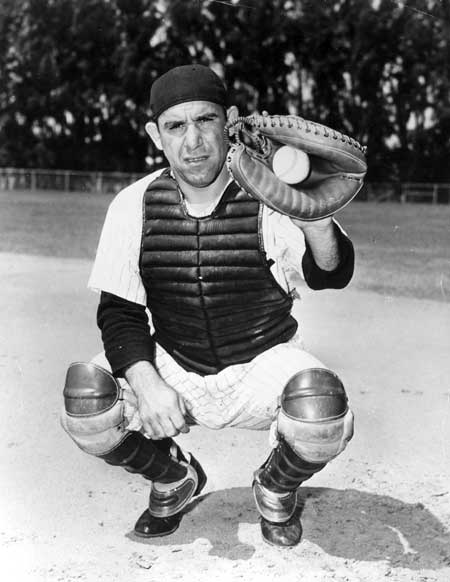
Lou Gehrig (AL 1923-1939) has a small, but clear edge over Jimmie Foxx (AL 1925-1942) (NL 1942-1945). We do want to mention Hank Greenberg (1933-1941, 1945-1947) in the discussion. As mentioned in our Detroit Tiger article, Greenberg was drafted into the U.S. Army in October 1940 and wasn’t discharged until June of 1945. He served more time than any other major league baseball player. From age 22 (1933) to age 29 (1940) when he was drafted into the U.S. Army, he hit 247 home runs, and drove in 1,001. To compare that to Gehrig, Gehrig’s first season as a regular was 1925 (he was 22). He hit 267 home runs and drove in 1,144 runs through age 29. Foxx’ numbers through age 29 were 371 home runs with 1,352 RBI. Greenberg came back at the end of the 1945 season (when he was 34) and hit 13 home runs with 60 RBI in 78 games! In 1946 (age 35) he hit 44 home runs with 127 RBI. Foxx was pretty well through by age 34 (8 HR, 33 RBI), while Gehrig was still productive through 35, but was diagnosed with “Lou Gehrig’s Disease” at age 36 and was then done. If not for the war, Greenberg would definitely be in the conversation.
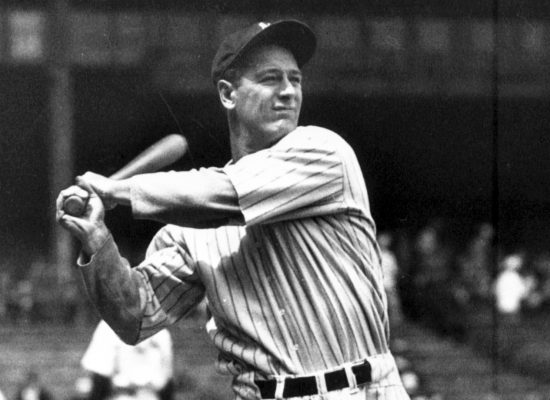
There’s only two to choose from, Napoleon “Larry” Lajoie (AL 1901-1916) (NL 1896-1900), and Eddie Collins (AL 1906-1930). Lajoie was a big star during the American League’s first decade. In fact he won the triple crown in 1901. He was the best player in the league until Ty Cobb. The problem rating Lajoie is that his best season was in a league that was a minor league the year before. He also played five years in the National League before the American League was formed. His best years were in the Junior Circuit, but that means that about 13% of his total value was in the other league. Eddie Collins (AL 1906-1930) on the other hand spent 100% of his time in the American League. Collins is probably the least appreciated great player of all time. He was highly regarded while active. There are only records of the voting for seven of the MVP Awards Collins was involved in, four while he was in Philadelphia and three while in Chicago. He finished 1st (1914), 2nd twice (1923, 1924), 3rd twice (1911, 1913), 5th (1922), and 6th (1912) in those seven votes. His overall WAR was 123.9, which is greater than Lajoie’s 107.3, and also leads Lajoie in Win Shares 574-496. To top it off, Eddie Collins (AL 1906-1930) was a winner, winning four pennants and three world championships with the Athletics (not counting the two the Athletics won in 1929 and 1930 when Collins only played in 12 games), and two pennants and one world championship with the White Sox. Lajoie’s Cleveland teams won zero championships.
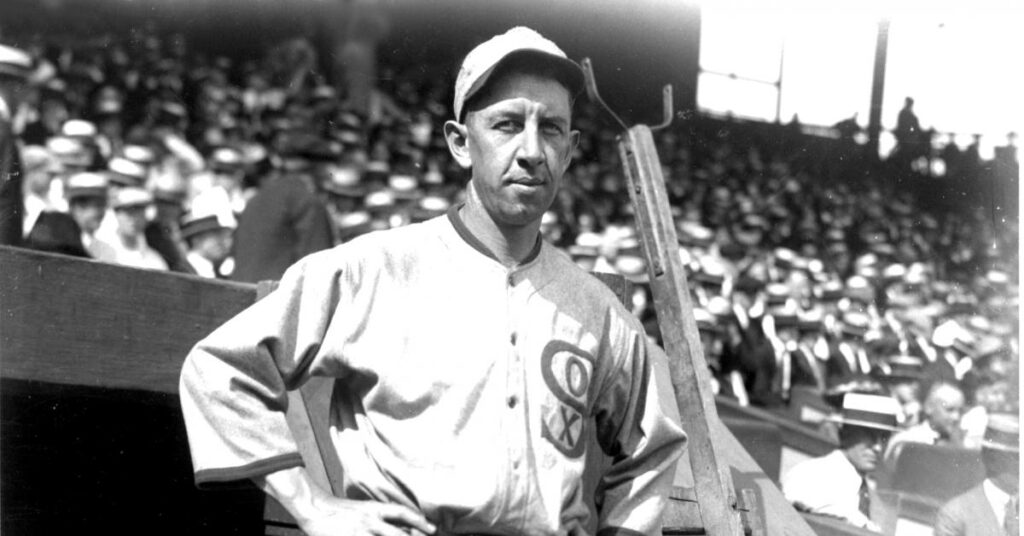
As good as Frank “Home Run” Baker (1908-1922), Brooks Robinson (AL 1955-1977), and Paul Molitor (AL 1978-1998) were, they each had weaknesses that eliminate them from consideration. Baker’s career was too short. Robinson, despite being the best glove man ever at third, his offense was just not productive enough.While Molitor’s offense was excellent, his defense at third base was so bad that he spent more time as a Designated Hitter than a third baseman, 791 games at third and 1,174 games at DH.
That leaves George Brett (AL 1973-1993) and Wade Boggs (AL 1982-1999) which are very close. The rating systems are a split decision, Boggs leads in WAR 91.4 to 88.6, but Brett leads in Win Shares 432-394. Our system shows Brett ahead by a significant 15,763-13,326 margin. As we said before, our system gives extra credit for contributions to successful teams. Both players were important cogs on championship teams. Boggs’ teams won one AL Pennant, two other division championships with the Boston Red Sox, and two more division titles with the New York Yankees that includes a World Series Championship in 1996. Brett’s Kansas City Royals dominated the American League West from 1976 until 1985. In those ten seasons they won the Western Division seven times, including a World Series appearance in 1980, and a World Series Title in 1985. This is a small advantage for Brett, that turns into a bigger advantage when you consider that Brett was the best player on the Royals, while Boggs was probably the second best player on the Red Sox (behind Roger Clemens) and somewhere between 3rd and 5th with the Yankees (Bernie Williams, Paul O’Neill, Tino Martinez, Derek Jeter could all be considered better). Brett’s best years were better than Boggs’ best years, winning an MVP in 1980, finishing 2nd twice, and in the top ten two other times. Boggs never finished higher than 4th in the MVP vote. It’s close, but subjectively we would choose George Brett (AL 1973-1993), and the imperial evidence seems to support that choice. The wild card in the evaluation is Alex Rodriguez (AL 1994-2016). ARod leads both candidates in all three metrics we use to judge value. His career WAR is 117.5 and Win Shares is 490. He also leads in the metrics we use with 21,824. The indecision occurs because ARod played more games at shortstop (1,272) in his career than at third base (1,194).
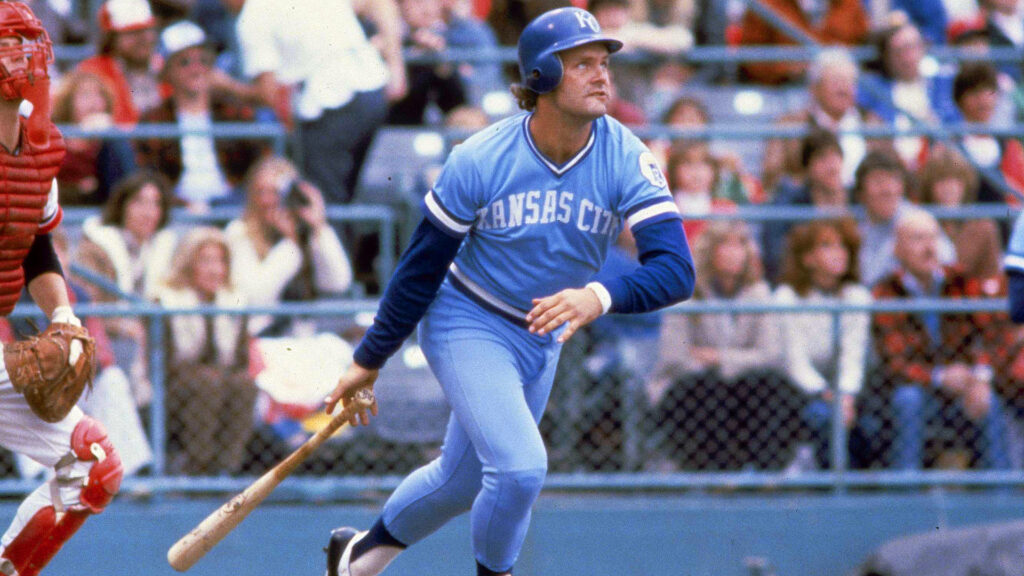
Besides Alex Rodriguez there are only three American League shortstops that can claim the top spot. Before the 1970s, Luke Appling (1930-1943,1945-1950) would be an easy choice. He was always underrated because he played for the Chicago White Sox during a time they were rarely competitive. He was on no team that won an American League Pennant, and only six times finished in the first division. In defense of Appling, neither one of the two he’s being compared to had much team success either.
Robin Yount’s (AL 1974-1993) Milwaukee Brewers won one Pennant (1982) and one half Division Title (1981) in his 20 year career, while Cal Ripken’s (AL 1981-2001) Baltimore Orioles won one World Championship (1983) and one other Division Title (1997) in his 21 year career. Appling’s best year (1944) was better than both Yount’s (1982) and Ripken’s (1984). All three were good with the glove, but not great. Bill James rates Appling a “B”, Yount a “B-”, and Ripken a “B+”. World War II was a mixed bag for the evaluation of Appling. He missed the 1945 season serving his country, but his best season (1944) is overrated due to the diluting of talent due to the war. His best season outside the war years is not on the same level as Ripken’s or Yount’s best seasons. Appling belongs in the conversation, but ultimately places below the other two.
Yount and Ripken are an interesting comparison. Due to an arm injury “Rockin” Robin only spent 11 seasons as a shortstop and nine as a center fielder. That’s an interesting combination, and he won an MVP at both positions (1982, 1989). His 1982 MVP season is probably the greatest season ever by a shortstop not named “Honus”. As good as he was as a center fielder, he was a more valuable shortstop. Ripken also won two MVP Awards (1983, 1991), and was a slightly better defensive shortstop than Yount. The rating systems we use puts Yount narrowly ahead in Win Shares (423-419) and Ripken ahead in WAR (95.9-77.3). The metrics we use also puts Ripken ahead (15,750-12,102). Not really comfortable with this choice, but we’ll go with Cal Ripken (AL 1981-2001) over Yount.
Now, like third base, the wild card is Alex Rodriguez (AL 1994-2016). ARod was a significantly more productive offensive player than either Yount or Ripken, but he was not as good with the glove (James rates him a “C+”). He also has a huge asterisk next to all his numbers due to PED use. We’ve said from the beginning that it’s production on the field that matters. If it was close we would go with Ripken, but it’s not. Rodriguez leads Ripken in WAR (117.5-95.9), Win Shares (490-419), and the system we use (21,824-15,750). In conclusion Alex Rodriguez (1994-2016) is the choice if we rate him at shortstop. Should we? Alex won three MVPs, two as a third baseman (2005, 2007) and one as a shortstop (2003). Despite that, his most valuable seasons were at short. In his 10 seasons there he had two other seasons where he finished second in the voting, and three others in the top nine. His best finish, besides his two wins at third was 8th in 2008. Forced to choose we feel the team is better with Alex Rodriguez (1994-2016) at shortstop and George Brett at third base.
Left Field
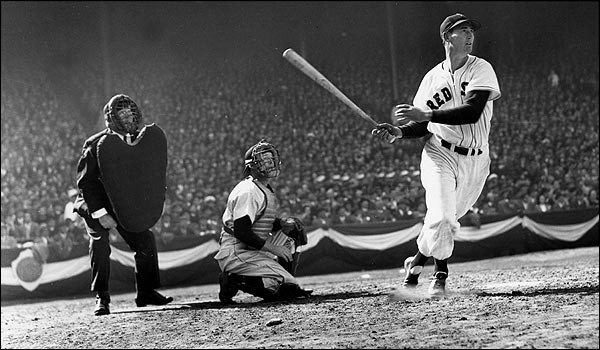
Carl Yastrzemski (AL 1961-1983) replaced Ted Williams (AL 1939-1960) in left field for the Boston Red Sox. It’s hard to imagine two more similar players occupying the same position for the same team from 1939 to 1980. Yaz was a big star, an 18 time All Star, the MVP in 1967 when he won the triple crown. He had 3,419 hits, a 96.4 WAR with 488 Win Shares and a first ballot election to the Hall of Fame. Unfortunately that’s not a better record than “Teddy Ballgame”. Williams won two triple crowns and two MVPs. He’s one of the top three offensive players of all time (with Ruth and Barry Bonds). His career numbers are hampered by the fact he spent five years in the middle of his career flying fighter planes during World War II and the Korean Conflict, but he still managed 521 Home Runs and 2,654 hits and a WAR of 121.9 and 555 Win Shares. Williams was better.
Rickey Henderson (AL 1979-1995, 1998, 2000, 2002) (NL 1996-1997, 1999-2001, 2003) is a tougher matchup for Ted Williams. Henderson is the greatest lead off man of all times. He holds the career record for runs scored and stolen bases. His career on base percentage was .401, and he hit 297 home runs. He was also a devastating offensive player. He won a MVP in 1990 and was a 10-time All-Star, who was also a Gold Glove outfielder. He did spend a couple of years in the National League late in his career, but it only amounted to about 5% of his overall value. But it doesn’t really matter, the comparison between Ted Williams (AL 1939-1960) and Rickey Henderson is not close.
A moment to discuss everybody’s favorite crook, “Shoeless” Joe Jackson (AL 1908-1920). Jackson was an excellent hitter, but a marginal outfielder. He only had a 13 year career and his last major league game was when he was 32. The painting by media types to put him in the Hall of Fame is rather disgusting. His career WAR is 62.1, which puts him in the marginal category, even if he didn’t have that big black mark next to his name. People, he took money from the gamblers with the promise he would throw the World Series, and then lied about it in court. If you want to put another player in the Hall from Jackson’s generation, why don’t you campaign for Ray Chapman. Chapman’s only crime was that he couldn’t get out of the way of a Carl Mays fastball. Stop it!
MVP
How obvious is the choice here? George Herman “Babe” Ruth (AL 1914-1935) WAR while with the Yankees was 142.8. That would place him third all time in the American League (behind Walter Johnson and Ty Cobb). His Win Shares with the Yankees was 574. There’s only two American League players who top that in history (Ty Cobb and Tris Speaker). Ruth’s 52,638 points in New York in our system easily tops Walter Johnson’s 44,561 and Tris Speaker’s 48,119, and is just a fraction behind Cobb’s 52,831 (all these numbers are huge) The Yankees won 7 Pennants and four World Series Titles while “The Babe” was in New York. That’s more than Johnson and Cobb combined. You could make a case that if Ruth’s entire value was in a Yankee uniform he would be the greatest player in American League history. Of course that would not give “The Bambino” credit for his time in Boston. The six years Ruth spent with the Red Sox increased his WAR to 182.5 (most of all time), Win Shares to 758 (most of all time) and our system, 89,117 (most of all time). That is 40% more than the next highest total (Cobb 52,831). George Herman “Babe” Ruth (AL 1914-1935) is the greatest player in American League History, period!