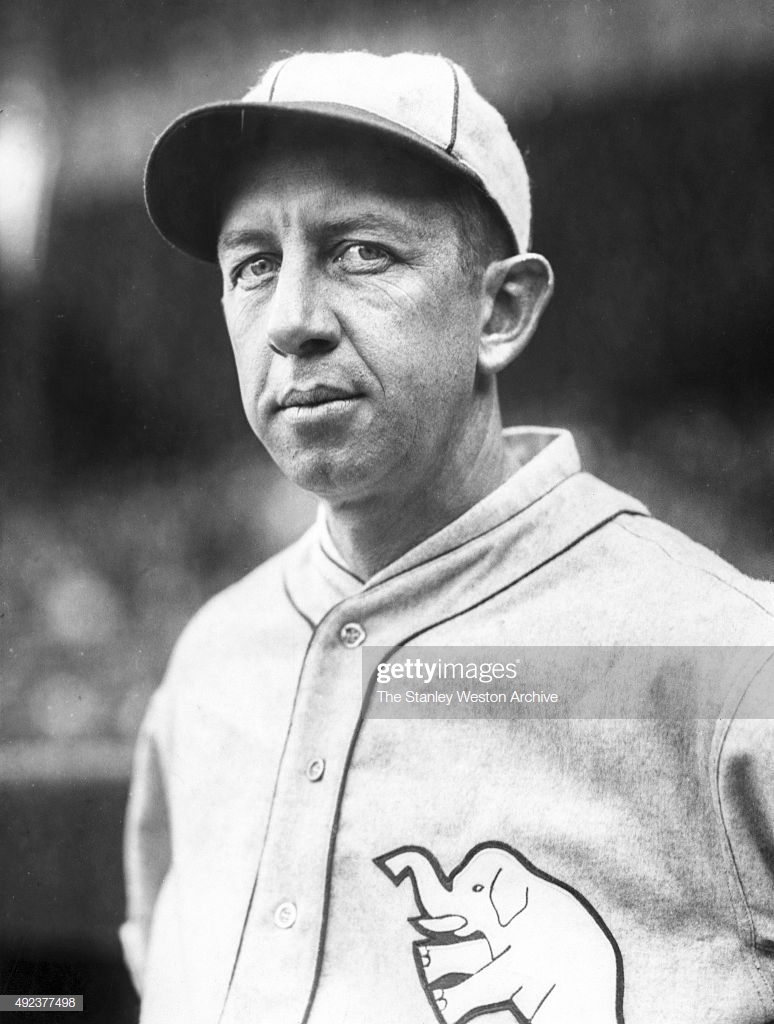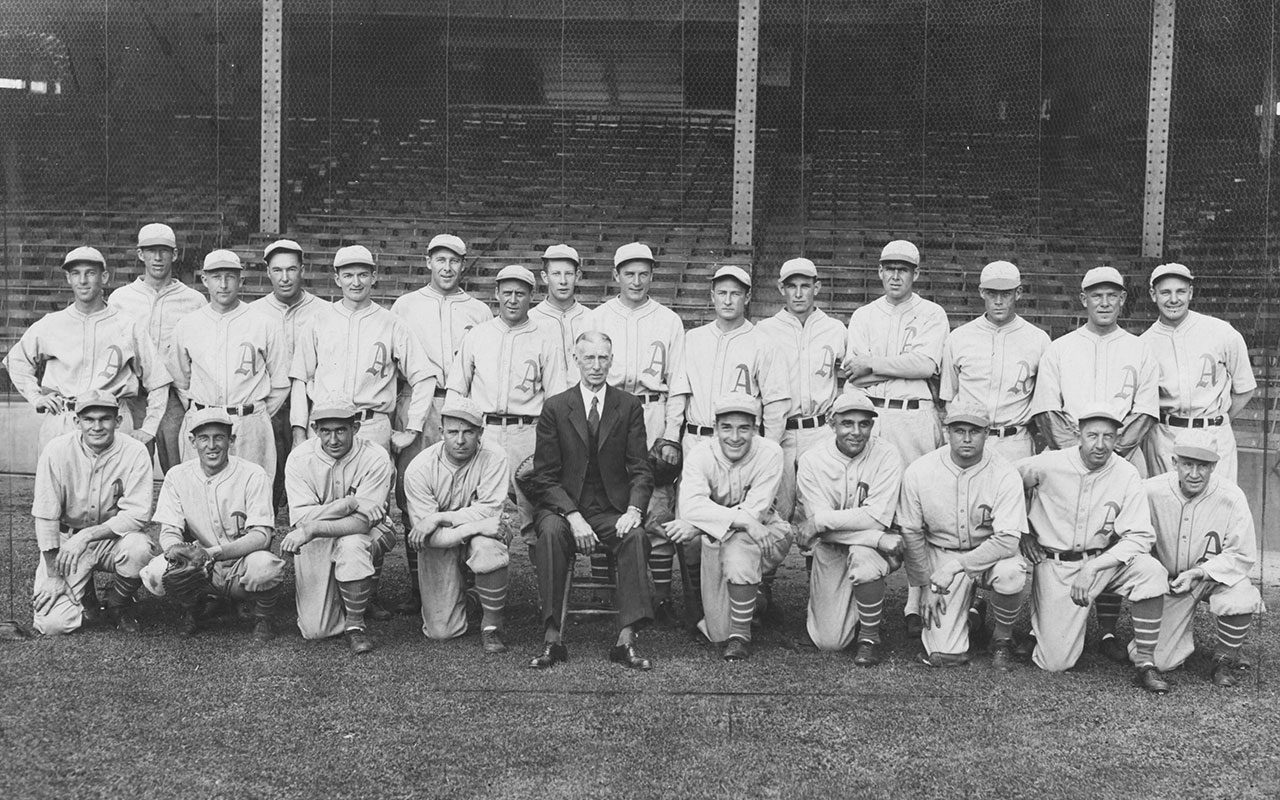
Oakland Athletics (1968-Present)
Kansas City Athletics (1955-1967)
Philadelphia Athletics (1901-1954)
Also known as the White Elephants
Also known as the Oakland A’s
American League (1901-Present)
American League Champion: 1902, 1905, 1910, 1911, 1913, 1914, 1929, 1930, 1931, 1972, 1973, 1974, 1988, 1989, 1990
World Series Champion: 1910, 1911, 1913, 1929, 1930, 1972, 1973, 1974, 1989
The Philadelphia Athletic franchise that was a charter member of the American League in 1901 had no connection to the Athletic teams that represented Philadelphia in the 19th Century. A club called the Philadelphia Athletics won the first Championship of the first Major League, the National Association of Professional Base Ball Players, in 1871. That franchise lasted until 1876. The American Association put a team in Philadelphia, named the Athletics, in 1882 that lasted until it was expelled from the league in September of 1890 due to the collapse of their fan base. The current Oakland Athletics also originated in Philadelphia and were the idea of Ban Johnson to challenge the National League in Philadelphia directly. The battle lasted 54 years, before the Athletics finally surrendered, and moved to Kansas City.
The Philadelphia/Kansas City/Oakland Athletics History can best be told by the eras of four men. Four dynamic baseball personalities, whose strategic innovations changed the game forever. Connie Mack was in charge from 1901 until 1950, Charles Finley owned the club from 1960 to 1980, Sandy Alderson joined the Athletics as General Council in 1981, then became General Manager in 1983 and basically ran the Club until 1998, when he was replaced by Billy Beane who has been in charge ever since. Four very different personalities, but baseball innovators all.
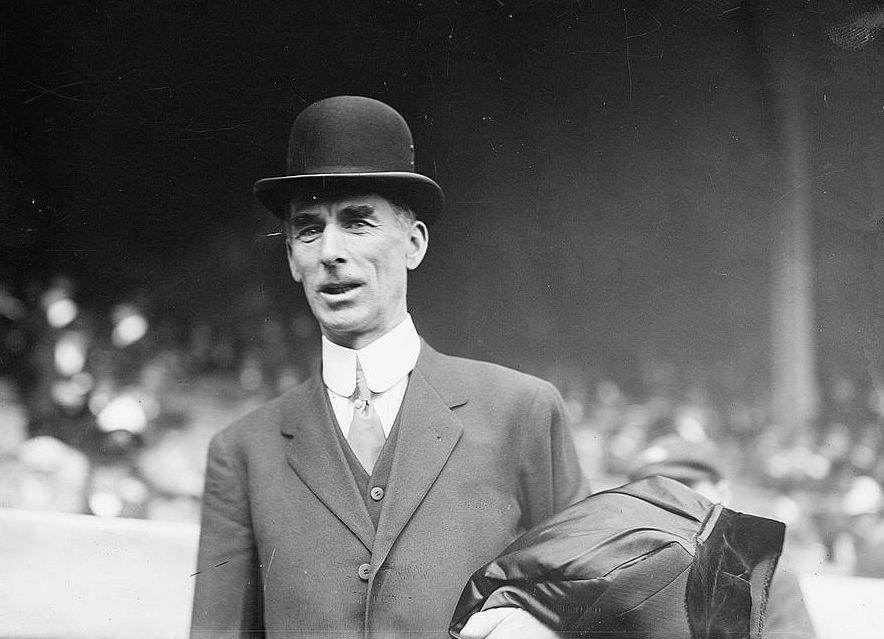
Connie Mack was hired to manage the team in 1901, and gained a 25% interest in the team. He ran the baseball side of the franchise, while the other investors controlled the business side. Mack was a brilliant judge of talent, and the Athletics were one of the premier teams in the new league, winning six pennants in the first 13 years of operation.
The 1910-1914 team, featuring the famous $100,000 Infield of Stuffy McInnis at first, Eddie Collins at second, Home Run Baker at third and Jack Barry at short, was the first great team in American League history. They won American League Championships in 1910, 1911, 1913, and 1914, and also the World Series in the first three. Mack’s problem was that, despite the success, their attendance began to slip. After leading the league in attendance in 1909-1911, with a high of 467,000 in 1909, their attendance began to sag. By 1914, with a first place team, attendance had fallen to 343,000. The coming of a third Major League, the Federal League, allowed salary demands to escalate. Mack couldn’t afford to compete in the salary war. He lost his two best pitchers to the new league (Eddie Plank and Chief Bender) and fearing more defections, sold Eddie Collins to the Chicago White Sox, Home Run Baker to the Yankees, and Jack Barry to the Boston Red Sox. The teams demise was predictable and severe. They went from 99 wins and a Pennant in 1914 to 43 wins in and a last place finish in 1915. They would not escape the cellar for the next six years.
After the failure of the Federal League, Mack began building his second great team. Mack was a great judge of talent, would personally scout his prospects, and was willing to spend money on players he wanted. He bought the contract of Al Simmons from the Minor League Milwaukee Brewers for $50,000 in 1923. In 1924 he purchased the entire Portland franchise in the Pacific Coast League for another $50,000 to get a young catching prospect, Micky Cochrane. Mack’s former third baseman Home Run Baker signed a 15 year catcher out of Maryland for his class D minor league team and then offered to sell him to his old manager. Mack paid a paltry $2,500 for the services of the teenage sensation. That kid’s name was Jimmie Foxx. Mack also gained a pipeline into the best minor league team at the time, Jack Dunn’s Baltimore Orioles. That’s where he acquired the contracts of Lefty Grove, George Earshaw and Max Bishop.
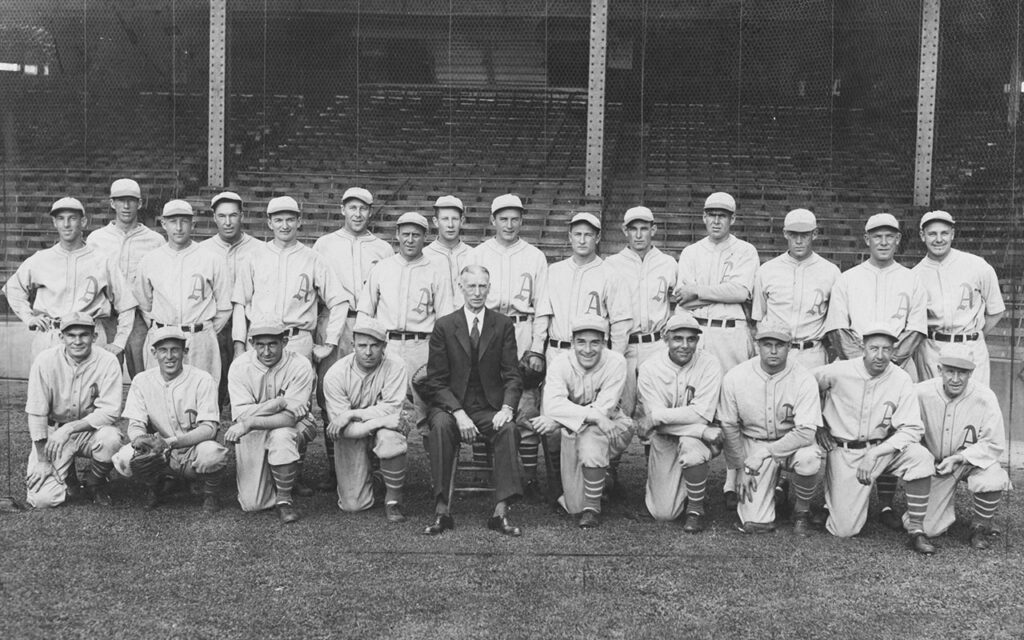
By 1925 the Athletics won 88 games and finished 2nd to the Washington Senators, followed that with a solid 3rd in 1926, a distant 2nd to the Yankees in 1927, and a close 2nd to New York with 98 victories in 1928. They finally dethroned Babe Ruth’s New York Yankees in 1929 and won three straight American League titles by 18, 8, and 13.5 games. Many claim that this Mack team was better than the 1927 Yankees, maybe the greatest team of all time. After finishing a distant second to the Yankees in 1932, Mack again started fretting about money. By 1934 he had sold off the heart of his second great team. This time he couldn’t recover, and the team fell out of contention for the next 38 years.
Mack didn’t release control of the team until 1950, when he was 88 years old (he would die in 1956 at age 93). The franchise continued to flounder, losing the battle for Philadelphia to the Phillies, and moving to Kansas City in 1955. Charlie Finley bought the club in 1960, and after a rough start, created a very productive farm system in the 1960s.
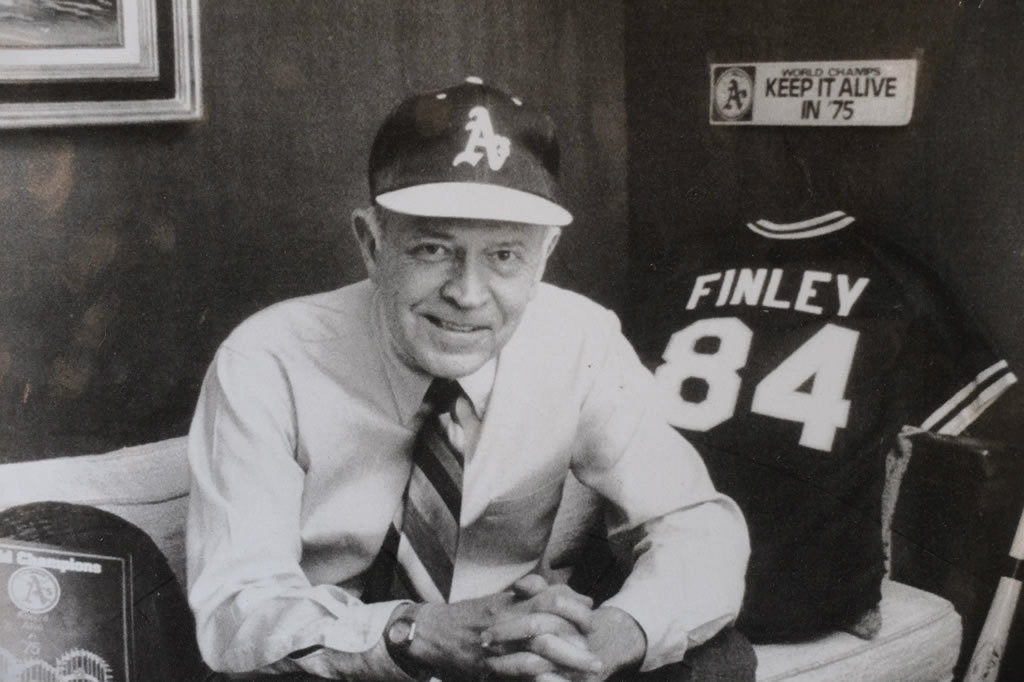
After 13 terrible years in Kansas City (they never had a winning record), Finley moved the team to Oakland just as the farm system began producing top talent. The Athletics jumped into contention in 1970, then won five straight Western Division Titles, starting in 1971, and three straight World Series titles from 1972-1974.
With the coming of the free agent era, the franchise was again unable to compete financially and due to Commissioner Bowie Kuhn’s decision to invalidate Finley’s attempt to sell the contracts of his best players, led to the Athletics losing the core of their third great team without compensation. By 1977 they were in last place with a 63-98 record. Finley again started stockpiling young talent through his farm system, but just as they were ready to contend, he was forced to sell the team before the 1981 season to the President of Levi Strauss & Company, Walter Haas.
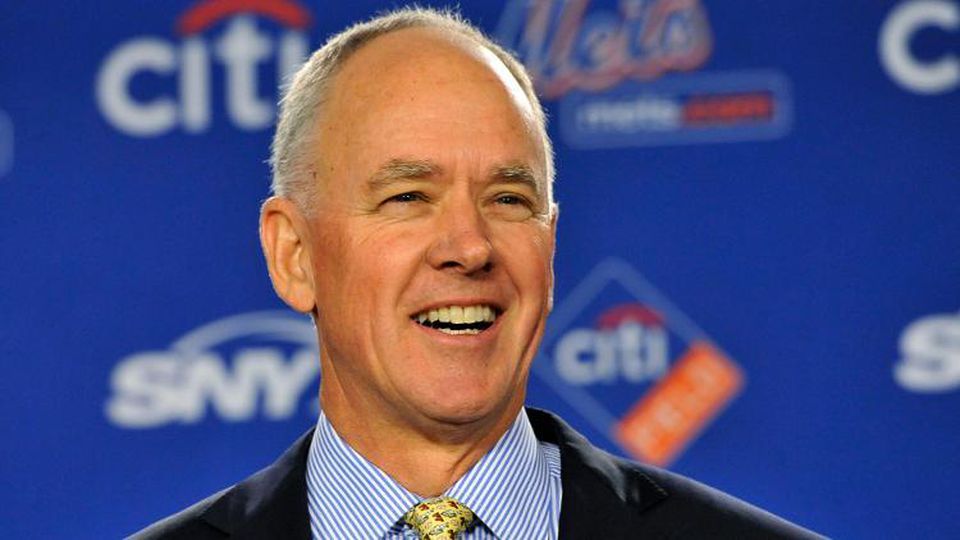
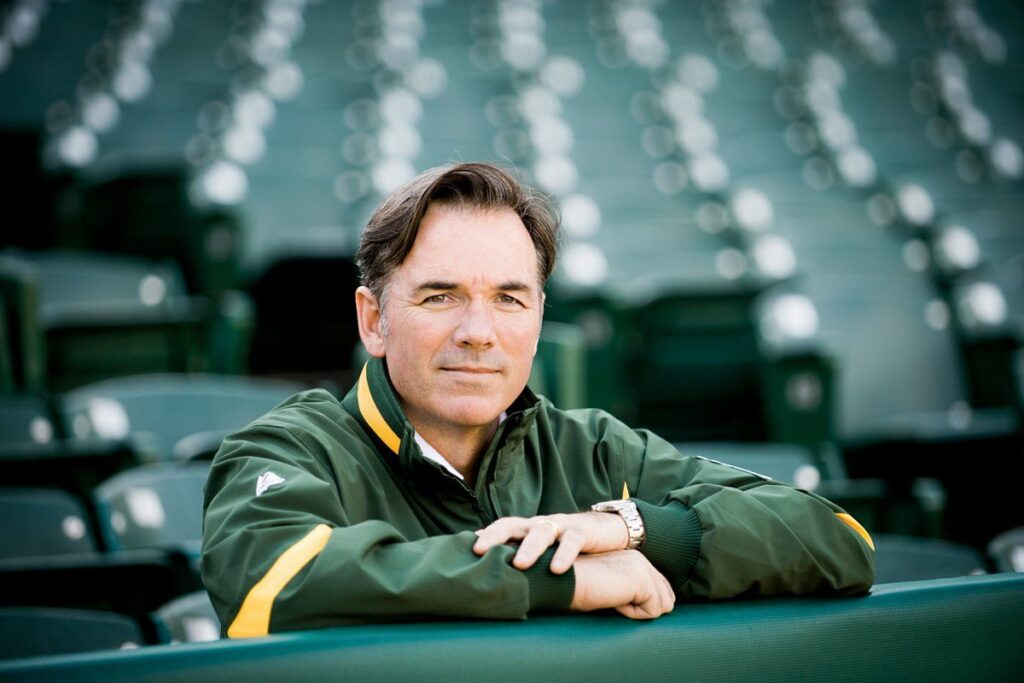
Alderson hired Billy Bean in the 1990s, and gave control of the baseball operation to him in 1998. Beane was the first baseball executive to implement the theories of Bill James, and despite the smallest payroll in baseball took a team from 65 wins in 1997 to 74 in 1998, then 87 in 1999. In 2000 they won 91 games and the American West Title, improving to 102 wins in 2001, and then 103 and another Western Division Championship in 2002. They had two firsts and two second place finishes in the next four years, before the rest of baseball copied his “Moneyball” philosophy, and with more money drove the Athletics out of contention.
For a club that always struggled at the gate and with a sub .500 overall record of 8,931-9,387, they have managed to be one of the most dynamic franchises in baseball history. Their 9 World Series victories is third all time, behind only the Yankees and the Cardinals, and their 15 American League Crowns is second to the hated Yankees. Currently, the Club continues to contend, even with one of the smallest payrolls in the Majors.
The A’s have had many dominant teams. In the book BASEBALL DYNASTIES, by Rob Neyer and Eddie Epstein, three Athletics Teams are included (1910-1914, 1929-1931, and 1971-1974), and another just misses (1988-1990). Only the Yankees have more entries. The problem with attempting to identify their Franchise MVP is none of their key players spent 15 years with the franchise, and most were there less than 10. Eddie Collins was the heart of Mack’s first great team. We think Collins was the greatest second basemen of all time, but he only played nine of his prime years in Philadelphia. He did return to finish his career with Connie Mack in 1927, but he was 40 years old and just about through.
Next is the foursome that led the powerhouse team that dethroned the Yankees in the late 1920s. It’s really hard to figure out which one of the four was the most valuable. Robert “Lefty” Grove, Al Simmons, Jimmie Foxx, and Gordon “Mickey” Cochrane were all central figures on a team that won 313 games, three pennants and two World Series titles between 1929 and 1931.
The next one to consider is the best player on the team that won three straight World Series in the early 1970s, Reggie Jackson. Jackson was great, but like the others his time with the Athletics was not very long. Rickey Henderson in two stints did spend 12 years with the A’s, and they were very productive years. Henderson is the most effective lead-off man in history.
Sorting it all out; Simmons was the weakest of the four who led their best teams from 1929-1931. Grove, Foxx, and Cochrane are all in the conversation as the best in history at their respective positions (pitcher, first base, catcher). All three won the MVP Award with Philadelphia, Grove in 1931, Foxx twice in 1932 and 1933, and Cochrane in 1928 (he also won one with Detroit in 1934). We ultimately think that Cochrane was the most valuable of the three, but that’s a very subjective choice. According to the metrics we use it’s Foxx, Simmons, Grove, Cochrane in that order. All four are behind Collins and Henderson, but three of the four are ahead of Jackson. There’s a good case for any of the eight, but we think it comes down to Collins and Henderson. Collins is slightly ahead by the formula we use, he was the best player on the Athletics’ first great team (1910-1914), while Henderson was not the best player on Oakland’s 1988-1990 juggernaut, Jose Canseco was. Like we said, this is not easy, but we’ll go with Eddie Collins (1906-1914, 1927-1930).