
Tennis has a host of impressive rivals; Federer/Nadal, Nadal/Djokovic, Evert/Navratilova, King/Court, Borg/McEnroe, and Sampras/Agassi. Tennis, as a sport, is defined by its rivalries. The first great rivalry that captured the world’s attention was between two women who could not have been more dissimilar and only played each other once.
For 12 years Suzanne Lenglen star shined the brightest in female sports. She was “The most polarizing player of generation” . The phrase Prima Donna was created to describe a person like her. Her level of celebrity may have been higher than any other international sports star ever. She was as big as the Babe, but throughout Europe and the United States. She was considered a national treasure by her home country and yet was abandoned by them when she chose to go pro.
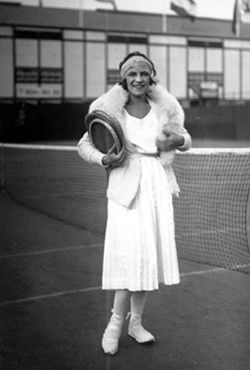
Suzanne Lenglen was born of a wealthy family in 1899 in Paris, France. She struggled with asthma as a child so her father made her take up tennis. Charles Lenglen, known as Papa to all, would be the first in what tennis would come to accept of monster parents. He would yell at his daughter when she would miss a shot as well as sneak her alcohol in the middle of matches (sometimes helping her hide them in ice cubes in her water bottle).
“Many of those who watched Suzanne’s practice sessions expressed dismay at the way Papa and Mama Lenglen callously utilized emotion to keep their daughter practicing and working and running hour after hour and day after day,” Larry Engelmann wrote in The Goddess and the American Girl, his book about Lenglen and Helen Wills.
Papa “assaulted and battered the child’s self-esteem, ridiculed her in front of spectators, and reduced her to tears and hysterics.” When Suzanne made an error, “Mama too openly expressed her dissatisfaction, hissing, ‘Stupid girl! Keep your eye on the ball!”
But it worked, at 20 years old she stormed into Wimbledon and forever changed the sport. Lenglen changed the game, especially on the women’s side, in a way few have done since. In her inaugural year, Wimbledon was an open format, taking all who entered. She made it through to the final where she face off against 40-year old Dorothea Chambers. Chambers had won tennis’s most prestigious event 7 times and as a Brit held the hearts of the crowd. King George V and Queen Mary attended the event of old versus young. Chambers served underhand, Lenglen smacked it from a toss above her head. Lenglen moved toward the net, introducing the volley to the women’s game. The match would go down as one of the greatest Wimbledon Finals of all time. The final score was 10-8, 4-6, 9-7.
A diva was born.
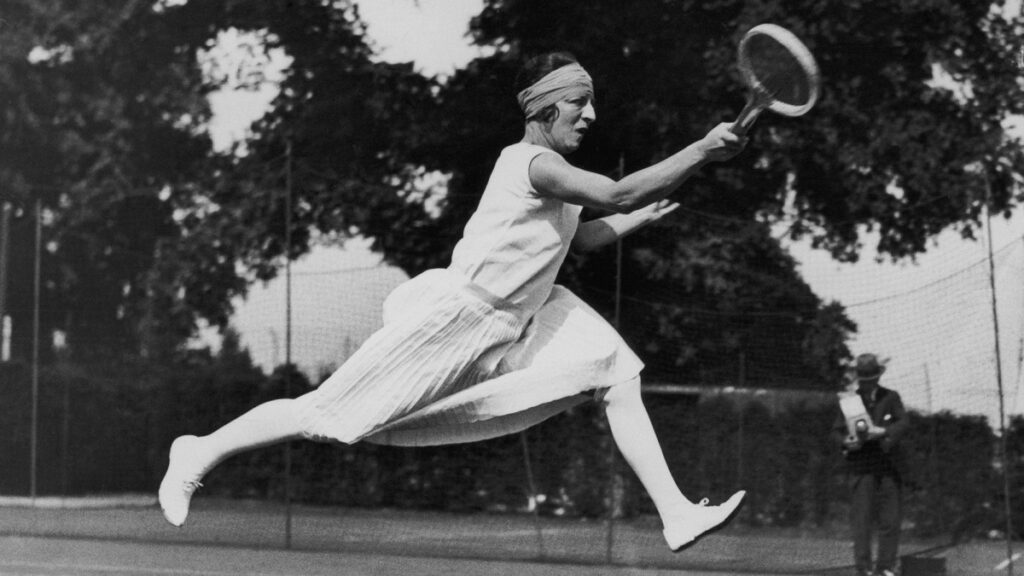
Lenglen would garner around her a cult following. They would pack into her matches at Wimbledon and hang from the rafters at the French. Lenglen would be at the top of the game in tennis, though World War I would greatly hinder her ability to play. She would win 181 straight matches during this time. She would win Olympic Gold in 1920 and after her 1919 Wimbledon victory wouldn’t give up that title until 1925 when a rival rose to challenge her.
Helen Wills beginnings were similar to Lenglen. She was born to moderately wealthy parents in San Francisco in 1905. But that is where the similarities stop. San Francisco was a far cry from Paris, which had been the the center of culture for a hundred years at this point. Claude Monet was peacefully painting his garden in France and changing the art world when Wills entered the world. San Francisco was a growing town adjusting to life after the gold rush that had filled it quickly. It may no longer have been run by only prostitutes and gamblers, but it certainly wasn’t a cultural center, or perhaps a place Lenglen or any other European could find on the map.
California was still the frontier in 1905. In 1906, a great earthquake would bring San Fran to it’s knees. This was the world that Wills was raised in, the rush as the frontier of America vanished and Manifest Destiny ran its course. While Lenglen lived her life in the rise and fall of France. From the heights it stood at the dawn of the Great War to the devastation it would endure as the world went to war on it’s land. France was a beleaguered and retiring world power. America was quite the opposite, it was youthful and just coming into it’s own. The war that would cripple France would propel the United States to be internationally interest.
Wills was raised as any good, wealthy, Victorian girl ought to be in California. She was taught by her mother and then a governess. As the only child of Clarence and Catherine, it was Clarence who first introduced her to the game of tennis. Tennis was a popular sport at the time, and Wills idolized many of California’s best players.
The Great War stopped most sporting endeavors and Wills’ life changed as her father was sent to France and she went to boarding school in Vermont. When the war ended, they all returned to San Francisco and her tennis career really began.
In September of 1921, at 16 years old, she faced off against her rivals in the California State Open. She won both the singles and doubles title. The next year she entered her first U.S. Championships (later to be renamed the U.S. Open). At just 17, she would run through to the Final where she was finally defeated by Molla Mallory who had won the event the previous six years. Wills would win all 7 of the following U.S. Championships she entered.
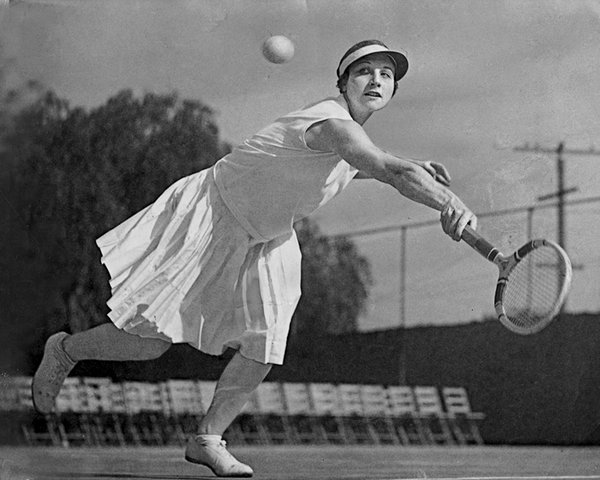
She went to her first Wimbledon in 1924 as the now two time defending U.S. Champion. She would make it to the Finals where she would lose to Brit Kitty McKane. The same year, she went to Lenglen’s backyard, and won the Olympic Gold Medal in both women’s singles and doubles.
After the Great War, Lenglen was lifted up by her French countryman of a symbol of their national pride. But Lenglen struggled with her health all year in 1924, and though she didn’t lose a match, she didn’t enter into the Olympic Games and watched the gold medal she had hoisted 4 years before go to the quiet American teenager. Lenglen was entered in Wimbledon that year, but withdrew after the third round. But a wave of anticipation was building around these two women.
The year Lenglen sat out for health reasons, Wills won Wimbledon, the U.S. and the Olympic Gold. 1925 tennis fans started to clamor for a match up. That year Wills won every major she entered and Lenglen won every major she entered, unfortunately Wills didn’t go to Europe that year and Lenglen didn’t go to stateside.
Lenglen had come to the United States in 1921 to much fanfare. She was anything but gracious to her American hosts, insisting on wine before each match even though Prohibition was in affect (officials smuggled her wine, just to show how big of a star she was). She faced off against Molla Mallory, the American Wills would dethrone from the top of the American game a year later. Mallory beat Lenglen in the first set and Lenglen experienced dramatic coughing fits. She lost a few more points in the second set. Lenglen called the Umpire down and said she was unfit to continue. The New York crowd booed her.
Lenglen was famous for complaining of illness on the tennis court but being found partying the night away on the same days. Lenglen would not return to the States again as a amateur. Everyone knew, if Lenglen and Wills were going to play, Wills would have to go to her.
1926 dawned and these two women were the talk of the world. Lenglen was hot tempered and full of drama. The media adored her and she soaked in the attention.
The stress of her parents and the celebrity never seemed to phase the beautiful and vivacious Lenglen. She changed fashion, introducing knee length dresses to the sport. The French media adored her and she gave them much to talk about. From drinking alcohol on the court to shouting and other such antics. She was known for dating loosely and being driven around in chauffeurs. She didn’t care about convention, a philosophy that was gaining steam in the post-Victorian age of the 1920s.
When asked to describer her playing style she said, “My method? I don’t think I have any. I just throw dignity to the winds and think of nothing but the game. I try to hit the ball with all my force and send it where my opponent is not.”
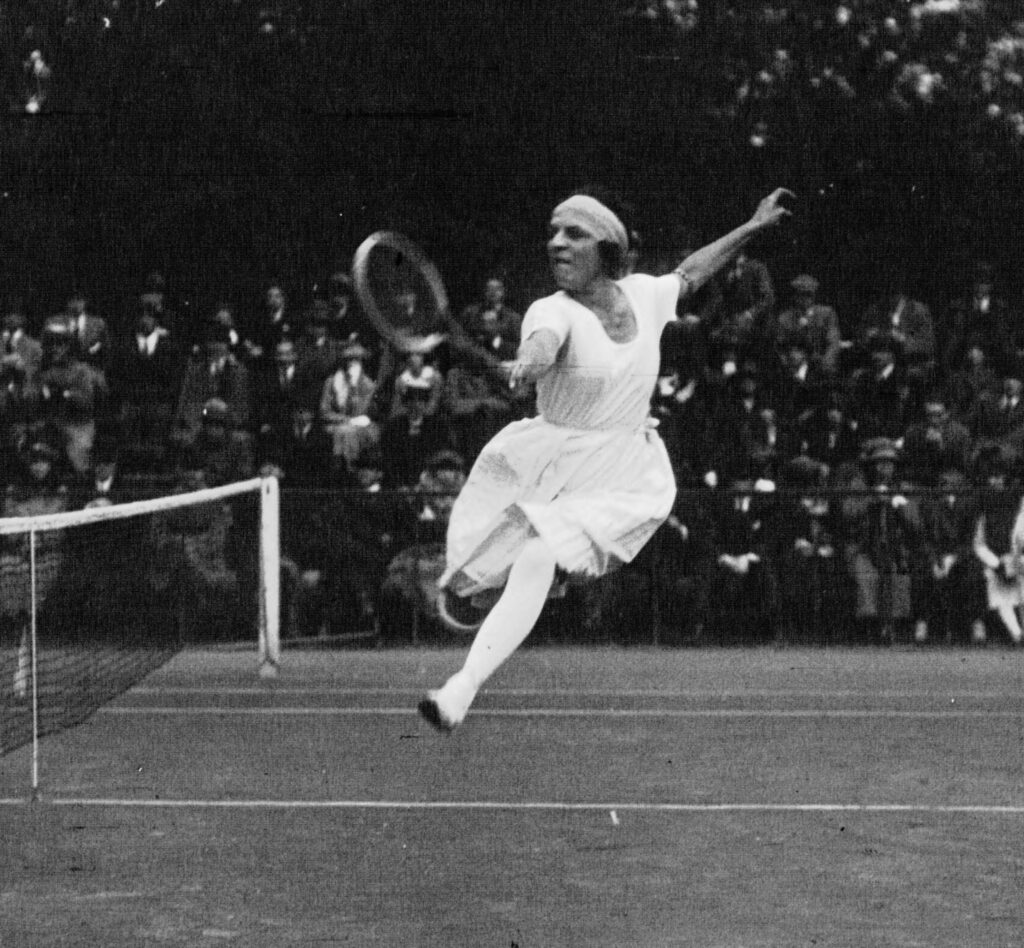
Helen Wills was everything not that.
Wills was very shy, even among her competitors. She fled the spotlight, earning her the ire of the newspapermen who followed her.
“I’ll let my racket do the talking,” she always said. But in the roaring twenties, the newspapers didn’t want that. Even though her racket was speaking loud and clear.
She would retire in 1938 to the reclusive life of an artist. She would marry twice and die at 1998 of natural causes. She would have no children and at 98 was to watch such greats as Martina Navratilova beat her record of most appearances in Wimbledon Finals and see Steffi Graf beat her record of 19 Major Titles. Only Serena Williams has passed her since. She still stands in 3rd in the Most Singles Major Titles, and she played 100 years ago and never played in Australia. She dominated her competition the likes of only a few can appreciate. But she also never had a rival to equal that of Suzanne Lenglen. A rivalry that could have been epic, yet was cut short. A rivalry that only met once and left everyone wanting more, even 100 years later.